

The Reasonable Man

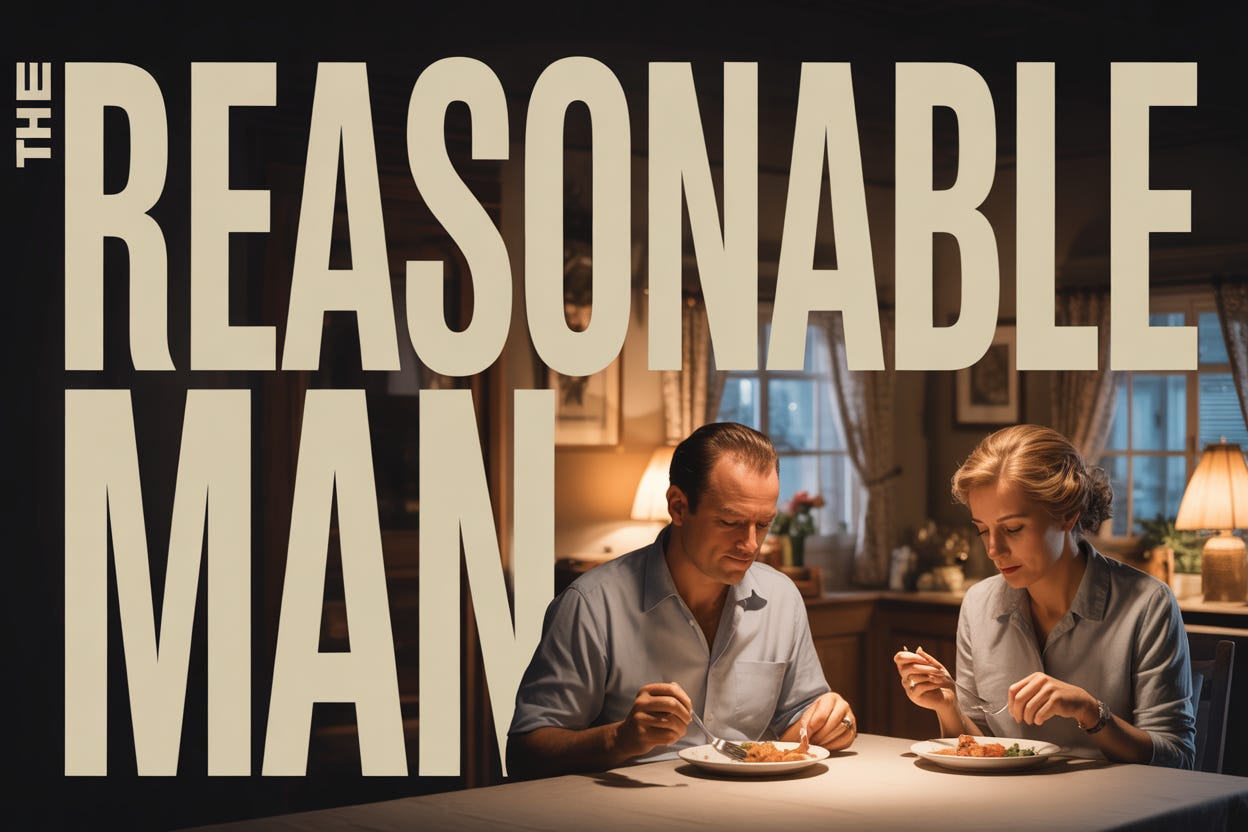
The Reasonable Man
Evan liked to think of himself as fair.
He listened. He adjusted. He didn’t raise his voice. When there was tension, he assumed he had missed something—some emotional nuance, some unspoken need. That, he believed, was maturity.
When his wife, Laura, came home upset from work, Evan canceled his plans without mentioning them. It seemed obvious that her day mattered more. When she criticized his tone, he apologized—even when he wasn’t sure what he had done wrong. If she was unhappy, the situation required fixing, and fixing required him.
This wasn’t resentment. It was love.
At least, that’s what Evan told himself.
When decisions came up—where to live, how to spend money, which friendships to maintain—Evan instinctively deferred. Laura had stronger feelings, clearer opinions. He told himself that intensity meant importance. If something mattered more to her, then it mattered more, period.
When his friend Mark complained about feeling sidelined in his own marriage, Evan felt embarrassed for him.
“You just have to be more emotionally aware,” Evan said. “Women carry more of that burden.”
Mark didn’t argue. He just looked tired.
At work, Evan was the same way. When female colleagues spoke, he nodded, encouraged, amplified. When men expressed frustration, Evan subtly distanced himself. He didn’t want to be that guy—the one who failed to notice women’s struggles. If there was a conflict, he assumed the woman had been wronged, even if the facts were unclear. Experience had taught him that neutrality was risky.
Better to err on the side of empathy.
At home, Evan grew quieter over the years. Not withdrawn—just careful. He edited himself mid-sentence. He learned which opinions created friction and which disappeared smoothly. He stopped bringing up his exhaustion. He told himself it wasn’t that bad. Other men had it worse.
When Laura once asked why he seemed distant, Evan froze. The question felt dangerous, like stepping onto thin ice. He reassured her quickly, explaining that he just needed to “work on himself.” She nodded, relieved. The conversation moved on.
Evan felt oddly proud of that moment. He had protected the relationship.
It wasn’t until much later—after a sleepless night, after rereading an old journal entry he barely remembered writing—that something shifted.
The entry was simple:
I don’t know where I went.
That sentence unsettled him.
He started paying attention—not to Laura’s emotions, but to his own patterns. He noticed how quickly he assumed women’s distress carried moral weight while men’s distress required explanation. How often he treated female discomfort as an emergency and male discomfort as a character flaw. How rarely he asked whether his needs were reasonable, and how often he assumed they were negotiable.
He realized something uncomfortable: none of this had been demanded outright.
He had assumed it.
He had assumed that women’s feelings were more fragile, more important, more deserving of protection. That men should absorb impact quietly. That harmony depended on male self-erasure. That good men yield first—and keep yielding.
Only then did Evan have a word for what he had lived by.
Not kindness.
Not empathy.
But a quiet, invisible prioritization—so ingrained it had felt like morality itself.
Gynocentrism.
He didn’t feel angry when he named it. He felt sad. Sad for how natural it had seemed. Sad for how reasonable it had felt to place himself last without ever calling it a choice.
For the first time, Evan wondered what fairness would look like if it included him.
And the question, once asked, refused to go away.
"For the first time, Evan wondered what fairness would look like if it included him." Wow!
I read these things with sadness, empathy and something I don't have a word for.
I am puzzled, afraid, selectively withdrawn, loved, confused and blessed. Yep totally fucked up.
My wife is not like this. We fight, we have arguments, we have disagreements, we aren't like the Hollywood picture of the perfect relationship. We have worked side by side in our business almost every day for the past 12 years. We have an autistic son who causes so much stress for us and our other son. There is one glaring difference.
My wife is supportive of me, especially at the worst times in my life. Her family (all women) are also supportive of me. I believe they are this way because of this glaring difference. I see this difference in many of our friends relationships. It's a hard difference to define, it is often completely misunderstood and is often treated in a demeaning and racist way.
My wife of 17 years is Thai. She comes from a family that struggled, struggled the right way.
The Western culture is sick, ill and in desperate need of something to bring it back to being wholesome again. For most Western cultures, we are still a long way from finding that something. Some Nordic countries are there, some of them are getting there, but not us English speaking countries. Why? What is the cause?
I have ideas, but they won't and aren't going to be popular.